Why Does IVF Fail? The 5 Main Causes — and What to Do Next
A failed IVF cycle is one of the most difficult experiences a couple can go through. The injections, the scans, the emotional investment, the financial cost — and then a negative pregnancy test. It can feel random, unfair, and without explanation.
But in most cases, IVF failure is not random. It has causes. Understanding those causes — clearly, without euphemism — is the first step to making a better decision about what comes next.
Cause 1: Poor Egg Quality
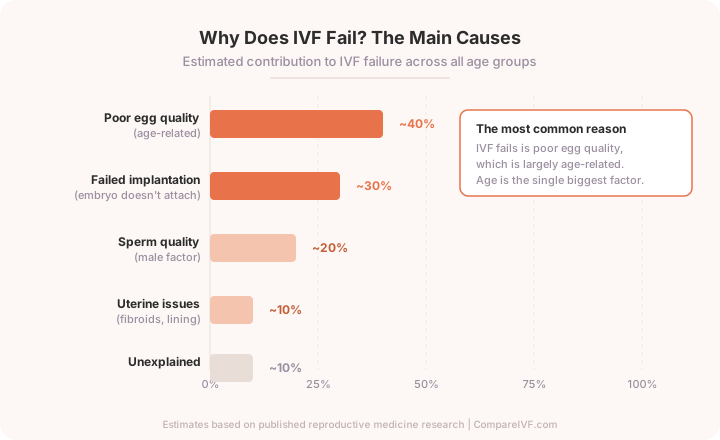
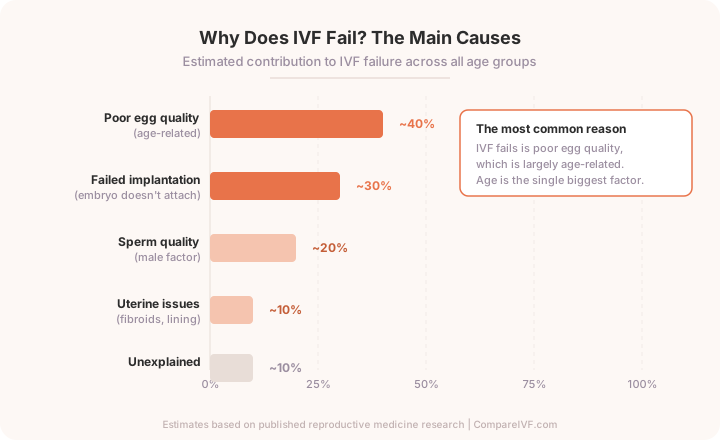
The single most common reason IVF fails is poor egg quality. Eggs that carry chromosomal abnormalities will not fertilise normally, or will produce embryos that fail to develop, fail to implant, or miscarry. This is primarily driven by age — egg quality declines significantly after 35 and steeply after 38.
Poor egg quality can't always be predicted before retrieval. A patient with good ovarian reserve (high AMH, many follicles) can still produce poor-quality eggs. PGT-A testing of embryos can identify chromosomally abnormal embryos and avoid transferring them.
Cause 2: Failed Implantation
The embryo was retrieved, fertilised, and developed normally — and then the transfer failed. This is called failed implantation. The embryo did not attach to the uterine lining. It is responsible for roughly 30% of IVF failures.
Causes of failed implantation include: suboptimal uterine lining thickness, a thin or inadequately prepared endometrium, uterine abnormalities (polyps, fibroids, adhesions), immune factors, and the embryo itself being chromosomally abnormal (without PGT-A, you can't know this until after the failed transfer). Endometrial receptivity testing (ERA) can sometimes identify a timing issue with the lining.
Cause 3: Sperm Quality
Male factor contributes to roughly 20% of IVF failures. Low sperm count, poor motility, and high DNA fragmentation can all reduce fertilisation rates and embryo quality. Sperm DNA fragmentation in particular is underdiagnosed — a standard semen analysis can look normal while DNA fragmentation is high, quietly reducing embryo quality.
If IVF has failed and the male partner hasn't had a sperm DNA fragmentation test (DFI), it's worth requesting one before the next cycle.
Cause 4: Uterine Problems
Structural problems with the uterus — fibroids (particularly submucosal ones), polyps, a thin lining, uterine septum, or Asherman's syndrome (intrauterine adhesions) — can prevent an embryo from implanting. These are usually identifiable on a saline infusion sonogram (SIS) or hysteroscopy, and many are treatable.
A hysteroscopy before your first IVF cycle can identify and correct uterine problems. Ask your clinic whether this investigation has been done.
What to Do After a Failed Cycle
A failed cycle is also information. Ask your clinic for a detailed debrief that covers: how many eggs were retrieved, how many fertilised, how many reached blastocyst stage, what quality grade the transferred embryo was, and the thickness and appearance of the lining on transfer day. If you transferred a day-3 embryo, ask whether a blastocyst transfer protocol might improve the selection process. If you haven't done PGT-A, discuss whether it's appropriate for the next attempt.
One failed cycle does not mean IVF cannot work for you. But two or more failures warrant a thorough re-evaluation — ideally with a second opinion from a different clinic.
The Bottom Line
IVF failure is more common than most patients expect, because most clinics communicate the headline success rate rather than the per-cycle failure rate. Understanding why cycles fail — and that each failure is a data point, not a verdict — is essential for navigating a fertility journey with clarity and resilience.
About CompareIVF Editorial Team
The CompareIVF editorial team combines fertility medicine expertise with investigative journalism to help patients make informed decisions about their fertility journey.