
How Many Injections Does IVF Require? A Complete Guide
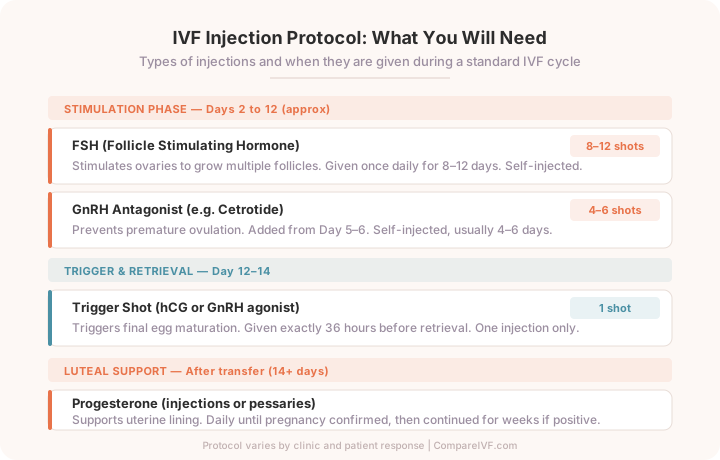
One of the things clinics often underemphasise when explaining IVF is the injections. Not the fact that injections are required — most patients know that — but how many. A single IVF cycle typically involves 40 to 90 injections over 4–6 weeks. For many patients, this is the part of IVF that feels most overwhelming before it starts.
Understanding what each injection does — and when in the cycle it appears — makes the whole process far less intimidating.
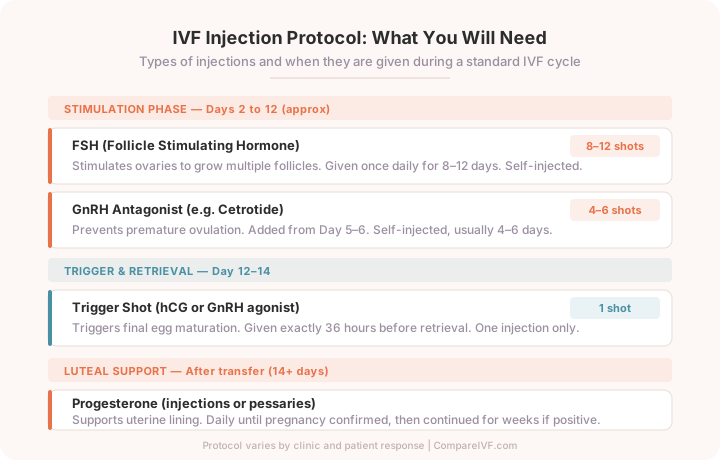
Phase 1: Stimulation Injections (Days 2–12)
FSH (Follicle Stimulating Hormone) is the primary stimulation medication. Brand names include Gonal-F, Puregon, and Fostimon. It tells your ovaries to develop multiple follicles simultaneously rather than the single follicle a natural cycle produces. FSH is given once daily, usually in the evening, via a subcutaneous injection (into the fat of the abdomen or thigh). It is self-administered using a pre-loaded pen. Duration: 8–12 days, depending on response.
LH (Luteinising Hormone) is sometimes added to FSH, particularly for older patients or those with a low response. It supports follicle development and egg quality. It comes as a separate injection or combined with FSH in medications like Pergoveris.
Phase 2: GnRH Antagonist (Days 5–12)
GnRH Antagonist (Cetrotide or Orgalutran) is added partway through stimulation, usually from Day 5 or Day 6. Its job is to prevent your body from releasing the growing eggs prematurely — a phenomenon called premature LH surge or premature ovulation. If this happens before retrieval, the cycle may be cancelled. The antagonist is a small subcutaneous injection, given daily until the trigger shot. Duration: 4–6 days, so typically 4–6 additional injections.
Phase 3: The Trigger Shot (Day 12–14)
The trigger shot is the most timing-critical injection in the entire cycle. It triggers final maturation of the eggs. Egg retrieval is scheduled exactly 36 hours later. The timing window is narrow — even a few hours off can affect egg maturity rates. The trigger is either hCG (e.g. Ovitrelle) or a GnRH agonist (e.g. Lupride), given subcutaneously. This is one injection only.
Phase 4: Progesterone Support (Post-Transfer, 2–10 Weeks)
Progesterone supports the uterine lining after embryo transfer. It is given from the day of retrieval onwards. It comes in three forms: vaginal pessaries (most common in India — twice or three times daily, no injection), vaginal gel (Crinone), or intramuscular injections into the buttock (Gestone, Progest). If the pregnancy test is positive, progesterone continues for 10–12 weeks into the pregnancy. If negative, it is stopped and the period follows.
Most clinics in India now use vaginal progesterone rather than injections. If your clinic prescribes IM progesterone, ask whether the pessary option is available — it is equally effective and far more comfortable.
How to Make Injections Easier
Let the medication come to room temperature before injecting — cold medication stings more. Rotate injection sites to avoid bruising at a single spot. Ice the area for 30 seconds before injecting to numb the skin. Use the smallest gauge needle available (the pre-loaded pens typically come with fine needles). Most patients say the injections become routine by Day 3 or 4.
Ask your clinic to show you the injection technique in person, not just via a printed leaflet. Most dedicated fertility clinics have nurses who will walk you through the first injection.
The Bottom Line
The injections are the most visible and tactile part of IVF — they are in your daily life in a way that clinic visits aren't. But they are manageable. Millions of patients self-inject through an IVF cycle every year. With the right preparation and support from your clinic, this part of the journey is very much doable.
About CompareIVF Editorial Team
The CompareIVF editorial team combines fertility medicine expertise with investigative journalism to help patients make informed decisions about their fertility journey.