
IUI vs IVF: What's the Difference, and Which Should You Try First?
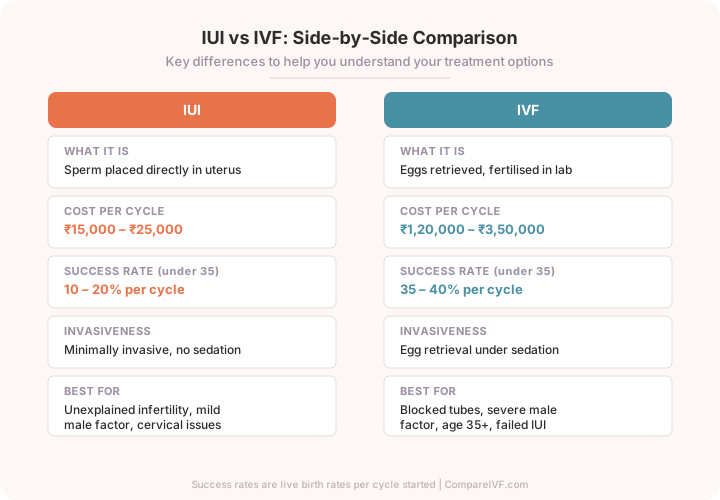
When a couple first visits a fertility clinic, they often leave with two acronyms they'd never heard before: IUI and IVF. They sound similar. They're both fertility treatments. But they are fundamentally different procedures, with very different costs, invasiveness, and success rates.
The right choice depends on your diagnosis, your age, and how long you've been trying. This guide explains both clearly, what each one actually costs and feels like, and how the odds change as you age.
What Is IUI?
Intrauterine Insemination (IUI) is a relatively simple procedure. The man provides a sperm sample, which is washed and concentrated in the lab to isolate the most active sperm. The prepared sample is then placed directly into the uterus through a thin catheter, timed to ovulation. The procedure itself takes about five minutes and requires no sedation. It feels like a smear test.
IUI may be done in a natural cycle (timed to natural ovulation) or a stimulated cycle, using oral medication like clomiphene or letrozole, sometimes with low-dose injectables, to produce one or two mature follicles. Monitoring is lighter than IVF — usually one or two scans rather than daily visits — and a trigger injection is given roughly 36 hours before the insemination to time ovulation precisely.
What Is IVF?
In Vitro Fertilisation (IVF) is significantly more involved. The woman is given daily injectable hormones for 10–14 days to stimulate the ovaries to produce multiple eggs. Those eggs are retrieved under sedation in a short surgical procedure. In the lab, the eggs are fertilised with sperm — either by conventional IVF (eggs and sperm placed together) or ICSI (a single sperm injected into each egg). The resulting embryos are cultured for 3–5 days, and one or two are then transferred back into the uterus.
What Each Procedure Actually Costs
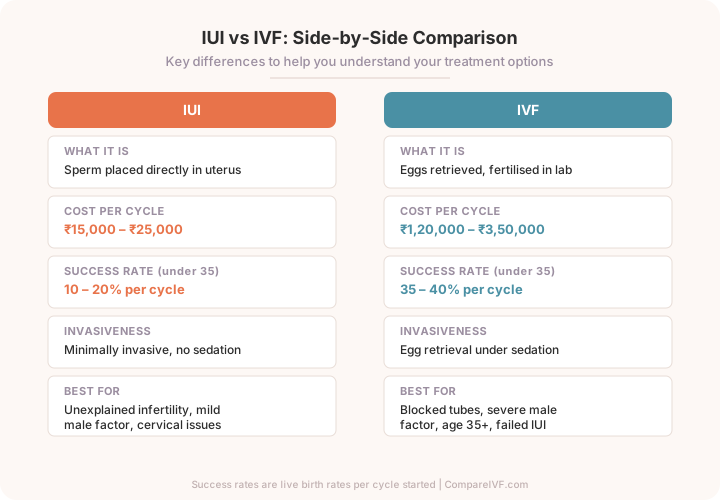
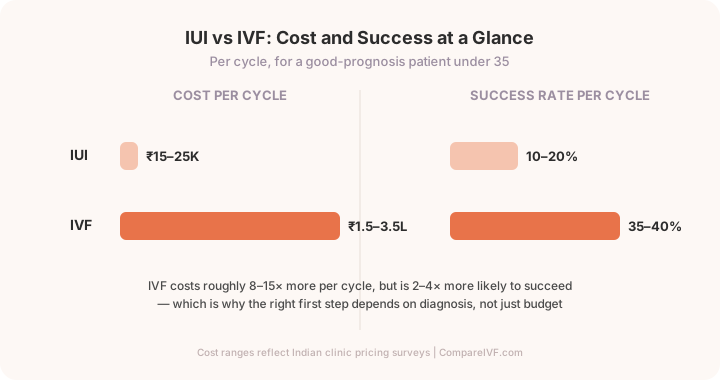
Cost is often the first practical question, and it's a stark difference. IUI is significantly cheaper than IVF, which is exactly why many patients start there when it's medically appropriate. We've broken down the full IVF cost picture, city by city, here.
Success Rates: The Honest Comparison
IUI success rates per cycle are 10–20% for women under 35 with a favourable diagnosis. IVF success rates per cycle are 35–40% for the same group. IVF is roughly twice to four times as likely to result in a live birth per attempt.
However, because IUI is so much cheaper, many couples do 3–4 IUI cycles before moving to IVF. The ASRM's guideline on unexplained infertility specifically recommends three to four cycles of medicated IUI as first-line treatment for good-prognosis patients under 35, before considering IVF. Because a low per-cycle chance compounds over several attempts, the cumulative success rate after 3–4 IUI cycles can approach 30–40% in this group — closer to a single IVF cycle than the per-cycle numbers alone suggest. The maths can genuinely favour IUI first, if you are a good candidate.
Success Rate by Age: IUI vs IVF
Age affects both treatments, but it erodes IUI's odds faster in relative terms. The chart below uses the same HFEA live birth data as our age-based IVF success guide, alongside typical IUI ranges from published clinical studies:
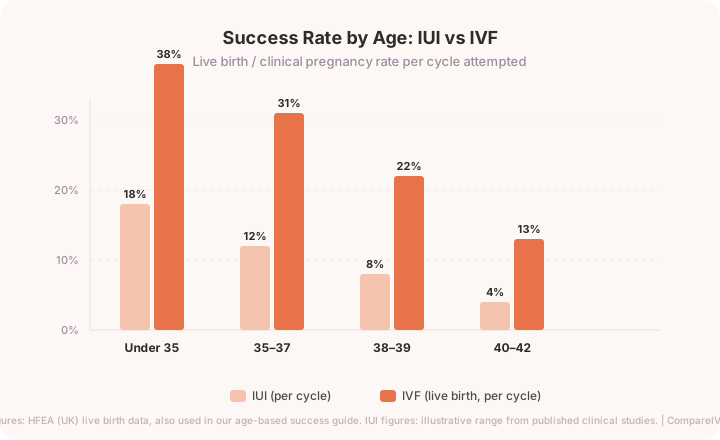
Past 38, IUI's odds fall low enough that most specialists will recommend moving to IVF sooner rather than spending months on cycles unlikely to succeed. This is one of the clearest cases where age, not preference, should drive the decision.
What Each Procedure Actually Feels Like
Neither procedure is painful in the way people often fear, but they're not the same experience. IUI involves no sedation and is over in minutes — closer to a routine gynaecological exam than a medical procedure. IVF involves two to three weeks of injections, a sedated egg retrieval with a day or two of recovery cramping, and a separate embryo transfer. We've written a full stage-by-stage guide to what IVF actually feels like here if that uncertainty is part of what's making the decision harder.
When Should You Start With IUI?
IUI is a reasonable first step if: you are under 35, you have been trying for less than two years, your partner's sperm count and motility are within normal range (or borderline), your fallopian tubes are confirmed open, there is no diagnosis of moderate-to-severe endometriosis, and the cause is unexplained or a mild cervical factor.
When Should You Go Straight to IVF?
Go directly to IVF if: both fallopian tubes are blocked or absent, there is a severe male factor (very low count, poor motility, high DNA fragmentation), you are 38 or older (IUI success rates drop significantly with age, as shown above), you have moderate-to-severe endometriosis, or you have already tried 3–4 IUI cycles without success.
A good fertility doctor will recommend IUI first when it's medically appropriate — not just because it's cheaper. If a doctor jumps to IVF immediately without clear reason, ask why.
The Bottom Line
IUI and IVF are not competing options — they are sequential steps in a clinical pathway for most patients. Most people who ultimately need IVF will try IUI first, if medically appropriate, and progress when it hasn't worked within 3–4 cycles. A clear diagnosis, not budget alone, is what should decide which step you start on.
Ask your clinic directly: "Given my specific diagnosis and age, what are my realistic success rates with IUI versus IVF?" The answer should drive the decision.
Frequently Asked Questions
Can IUI and IVF use the same monitoring or medications?
Partially — both may use similar stimulation medications at different doses, and both require ultrasound monitoring. But IVF requires daily monitoring and a surgical egg retrieval that IUI never involves.
Does failing IUI mean IVF will also fail?
No. IUI and IVF work differently — IUI relies on fertilisation happening naturally inside the body, while IVF fertilises eggs in a lab and can use ICSI to work around several of the reasons IUI might fail, including sperm-quality issues.
Is IUI ever a waste of time before IVF?
It can be, in specific cases — for example, if tubes are blocked, or male factor infertility is severe. That's exactly why the diagnosis should determine the starting point, not a default assumption that cheaper treatment should always come first.
Not sure which treatment is right for your specific diagnosis? Book a free consultation with our fertility advisors.
About CompareIVF Editorial Team
The CompareIVF editorial team combines fertility medicine expertise with investigative journalism to help patients make informed decisions about their fertility journey.