
Is IVF Painful? An Honest Guide to What You Will Actually Feel
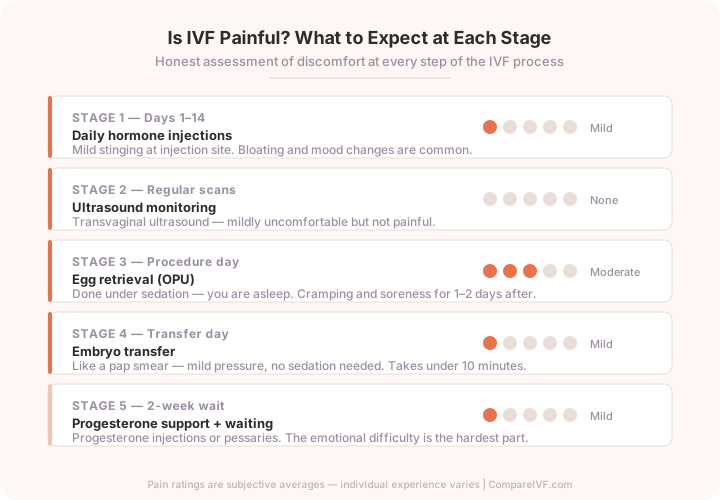
Fear of pain is one of the most common reasons people delay starting IVF. It is a completely understandable concern — you are facing weeks of injections, a surgical procedure, and an emotionally gruelling wait. The honest, stage-by-stage answer, for most patients, is that IVF is considerably more uncomfortable than painful. There is exactly one complication where "painful" is the accurate word, and it is uncommon enough that we have given it its own section below.
This guide walks through what you'll actually feel at each stage of a fresh IVF cycle — from the first injection to the two-week wait — based on what fertility specialists and patients consistently report. It also covers something most guides skip: how the specific protocol your clinic puts you on, and how your clinic manages sedation, can change how much of this you actually feel. If you're comparing clinics in Bangalore or elsewhere in India, these are the practical questions worth asking before you commit to a cycle — not just success rates.
Stage 1: Daily Injections (Days 1–14)
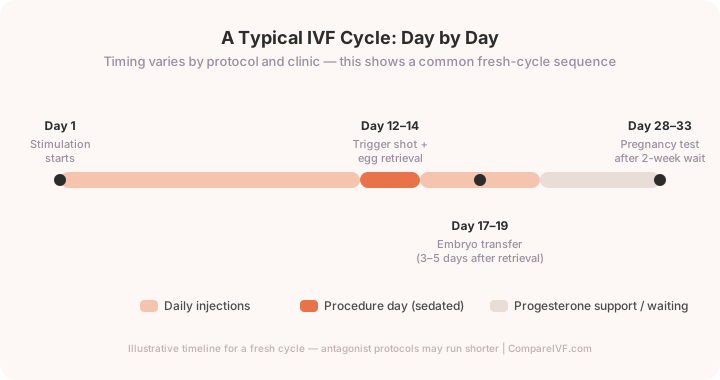
The stimulation phase requires daily subcutaneous injections — typically once or twice a day for 8 to 14 days depending on your protocol. The needles are small, much smaller than the intramuscular injections you may have had for vaccines. The injection itself is a brief sting, similar to a mild bee sting. Most patients are self-administering confidently within the first two or three days.
The more significant side effect is what the medications do, not the injections themselves. As your ovaries respond and grow multiple follicles, you will feel bloated. Your lower abdomen will be tender to pressure. Some patients describe it as permanent mild period pain. By day 10 to 12, if the response is good, the ovaries are enlarged and any pressure or exercise becomes uncomfortable.
If you want the full breakdown of how many injections a typical cycle involves and what each one does, we've covered that separately in our injections guide. A few small habits — covered later in this guide — make a real difference to how much the daily sting and bruising bother you.
Stage 2: Monitoring Scans
During stimulation, you will have multiple transvaginal ultrasound scans — typically every 2 to 3 days — combined with blood tests to track your hormone levels. The scan involves a small probe inserted vaginally to image the ovaries and count developing follicles. It is mildly uncomfortable, particularly by the end of the stimulation phase when the ovaries are enlarged and tender. It is not painful for most patients, and each scan takes only a few minutes.
Stage 3: Egg Retrieval (OPU)
This is the procedure most patients worry about most. Egg retrieval — also called OPU (ovum pick-up) — is done under sedation, guided by ultrasound. A thin needle is passed through the vaginal wall into each follicle to collect the fluid and egg inside. The procedure itself takes 20 to 30 minutes.
Sedation practice varies by clinic — more on that below — but the goal everywhere is the same: you should feel nothing during the procedure itself. What the days afterwards actually feel like:
- Day 0 (procedure day): groggy from sedation for a few hours; cramping begins as it wears off, similar to moderate period cramps. Most patients go home the same day and should arrange for someone else to drive.
- Day 1: cramping is usually at its worst, along with bloating and slight spotting. Rest is the main recommendation.
- Day 2–3: cramping steadily eases for most patients, and light normal activity is usually fine by day 3.
Most patients return to normal daily activity within 48 to 72 hours. The overall level of discomfort is comparable to the recovery from a minor laparoscopic procedure.
The egg retrieval procedure itself is not painful because you are sedated. The recovery is like a heavy period for 1–2 days.
Stage 4: Embryo Transfer
Embryo transfer is far less dramatic than retrieval, and for most patients it is the easiest procedure in the entire cycle. It is done without sedation. A thin catheter is passed through the cervix into the uterus under ultrasound guidance, and the embryo — or embryos — are transferred. Most patients describe it as feeling similar to a smear test: mild pressure, occasional brief cramping, nothing severe. The procedure takes under 10 minutes. If your cycle involves ICSI, that step happens in the lab on retrieval day and changes nothing about what the transfer itself feels like — we've explained the difference between IVF and ICSI here if you're not sure which applies to you.
Stage 5: The Two-Week Wait
Physically, this period involves continuing progesterone support — either vaginal pessaries (no significant pain, some discharge) or progesterone injections into the buttock, which can cause bruising and soreness at the injection site. For many patients, the progesterone injections are the most physically uncomfortable part of the entire support phase.
The real difficulty of the two-week wait is not physical. It is the emotional experience of not knowing — of analysing every twinge for a sign one way or the other, while carrying on with ordinary life. Many patients describe this as the hardest part of the entire cycle, harder than the injections or the retrieval.
It's also natural, during this wait, to start thinking about your odds. Success rates vary considerably by age and by diagnosis, and understanding roughly where you sit can make the wait a little less abstract. If a cycle doesn't result in a pregnancy, understanding the most common reasons IVF doesn't work on a first attempt can help you and your clinic decide what, if anything, to change for the next one.
Does Your Protocol Change How Much It Hurts?
Not every patient is on the same medication protocol, and the one you're on affects both how long the uncomfortable part lasts and your risk of the complication covered in the next section.
The two most common approaches are the GnRH agonist ("long") protocol and the GnRH antagonist ("short") protocol. Antagonist protocols generally involve a shorter stimulation phase and a lower total dose of gonadotropins — fewer days of injections and bloating for many patients. Several meta-analyses comparing the two protocols have found antagonist protocols are associated with a significantly lower risk of ovarian hyperstimulation syndrome (OHSS) than the long agonist protocol, in both general IVF patients and those with PCOS.
There is a trade-off: in the general IVF population, some studies found slightly lower ongoing pregnancy rates with antagonist protocols compared to the long agonist protocol — though this difference has not held up in women with PCOS or a poor ovarian response, where antagonist protocols perform just as well while remaining safer. None of this means one protocol is universally "better." It is a real clinical decision, not a default, and it is worth asking your clinic which one they have chosen for you, and why.
OHSS: The One Complication Where "Painful" Is the Right Word
Ovarian Hyperstimulation Syndrome (OHSS) is the one genuinely painful complication of IVF. It happens when the ovaries respond too strongly to stimulation medication, becoming significantly enlarged and causing fluid to leak into the abdomen.
According to ASRM's 2023 practice guideline, mild OHSS — bloating, mild discomfort, nausea, that usually resolves on its own — occurs in an estimated 20 to 33% of IVF cycles. Moderate-to-severe OHSS, which can require monitoring or hospitalisation, is far less common: roughly 1 to 5% of cycles overall, rising to as much as 20% in high-risk patients such as those with PCOS or a strong ovarian response.
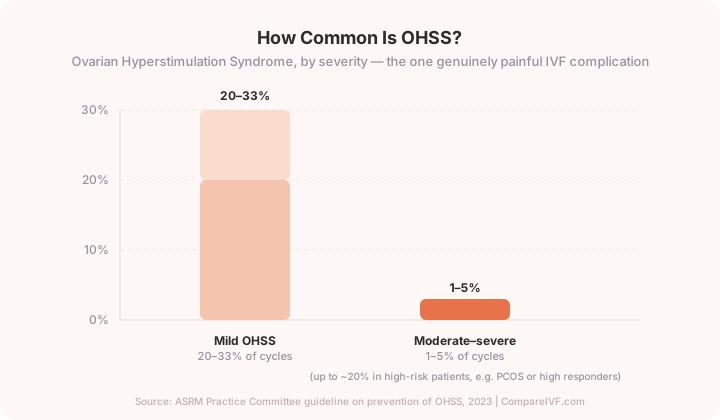
Your clinic should be monitoring your hormone levels and follicle count closely throughout stimulation specifically to catch a high-risk response early — this is part of why the antagonist protocol is often preferred for higher-risk patients, as described above.
Contact your clinic immediately if, especially after retrieval, you develop: severe bloating, weight gain of more than 2kg in 24 hours, difficulty breathing, severe abdominal pain, or a significant drop in urination. These are not symptoms to wait out.
How Pain Management Differs Between Clinics — India, UK, and the US
There is no single internationally agreed "best" way to sedate a patient for egg retrieval. Both a 2019 ESHRE recommendation and a Cochrane review of pain relief during oocyte retrieval concluded the choice should come down to patient preference, safety, and what a clinic can reliably provide — not a single ranked best method.
In the UK, retrieval is typically performed under monitored conscious sedation, while embryo transfer is almost always done with no sedation at all. In Indian clinics, practice varies more from one clinic to the next: some offer conscious IV sedation — usually midazolam and fentanyl, with propofol added if needed — while others use full general anaesthesia with intubation for the same 20 to 30 minute procedure.
Neither approach is inherently unsafe, and the choice often reflects a clinic's routine setup rather than your specific case. But it does change your experience: general anaesthesia typically means a longer recovery from grogginess and stricter fasting beforehand, compared with conscious sedation. This is exactly the kind of practical detail that gets lost next to a clinic's headline success rate — worth asking about directly, and building into how you search and filter clinics, not just on price or advertised outcomes.
Practical Ways to Make the Physical Side Easier
A handful of small, well-evidenced habits make a real difference to daily comfort during stimulation:
- Let the injection reach room temperature for 15–30 minutes before using it — cold medication stings more.
- Ice the injection site for 1–2 minutes beforehand; this numbs the area and shrinks blood vessels, reducing bruising.
- Let the alcohol swab dry completely before injecting — much of the sting people attribute to the needle actually comes from residual alcohol.
- Insert the needle quickly and confidently. Slow, hesitant insertions tend to hurt more than a quick one.
- Rotate injection sites — alternate sides of the abdomen or thigh, and never use the same spot two days in a row.
- A warm compress afterwards helps with soreness, especially from progesterone injections.
For retrieval day specifically: arrange for someone to take you home, plan to do nothing else that day, keep a hot water bottle on hand for cramping, and wear loose, comfortable clothing.
The Bottom Line
IVF is uncomfortable — especially the last few days before retrieval, and the day or two of recovery after it. But for the large majority of patients, it is manageable, and none of the individual steps involve pain you have to simply endure without support. The emotional experience of IVF is typically harder than the physical experience.
Going in with a clear, honest picture of what happens at each stage — including which parts depend on decisions your clinic makes, like protocol and sedation — makes the whole process significantly easier to navigate. It also puts you in a better position when you're working out the total cost of a realistic treatment journey and choosing where to have it done.
Frequently Asked Questions
Is egg retrieval more painful than embryo transfer?
Yes, noticeably. Retrieval is a needle procedure done under sedation, followed by one to two days of cramping as you recover. Transfer is a quick, unsedated procedure that most patients compare to a smear test.
Does a higher medication dose mean more pain?
Not directly. Discomfort tracks your ovarian response and protocol more than the raw dose on paper — a lower-dose antagonist protocol and a higher-dose agonist protocol can feel quite different even at similar hormone levels.
If my first cycle doesn't work, will a second cycle feel worse?
Not physically — each cycle is broadly its own experience. What tends to compound is the emotional weight and the cost, which is why it helps to understand the odds and the likely total cost upfront rather than partway through.
When should I actually be worried, rather than just uncomfortable?
Severe abdominal pain, breathing difficulty, rapid weight gain, or a sharp drop in urination — particularly in the days after retrieval — are signs of OHSS and warrant an immediate call to your clinic, not a wait-and-see approach.
Have a question about IVF pain, protocols, or what to expect at your clinic specifically? Book a free consultation with our fertility advisors.
About CompareIVF Editorial Team
The CompareIVF editorial team combines fertility medicine expertise with investigative journalism to help patients make informed decisions about their fertility journey.